Blog · Steve Hall · 21 July 2026
Cranial osteopathy
What is cranial osteopathy?
A plain-English explanation of cranial osteopathy from Steve Hall — a gentle osteopathic approach used at Health at Hart for people of all ages, including babies.
Blog · Steve Hall · 21 July 2026
Cranial osteopathy
A plain-English explanation of cranial osteopathy from Steve Hall — a gentle osteopathic approach used at Health at Hart for people of all ages, including babies.
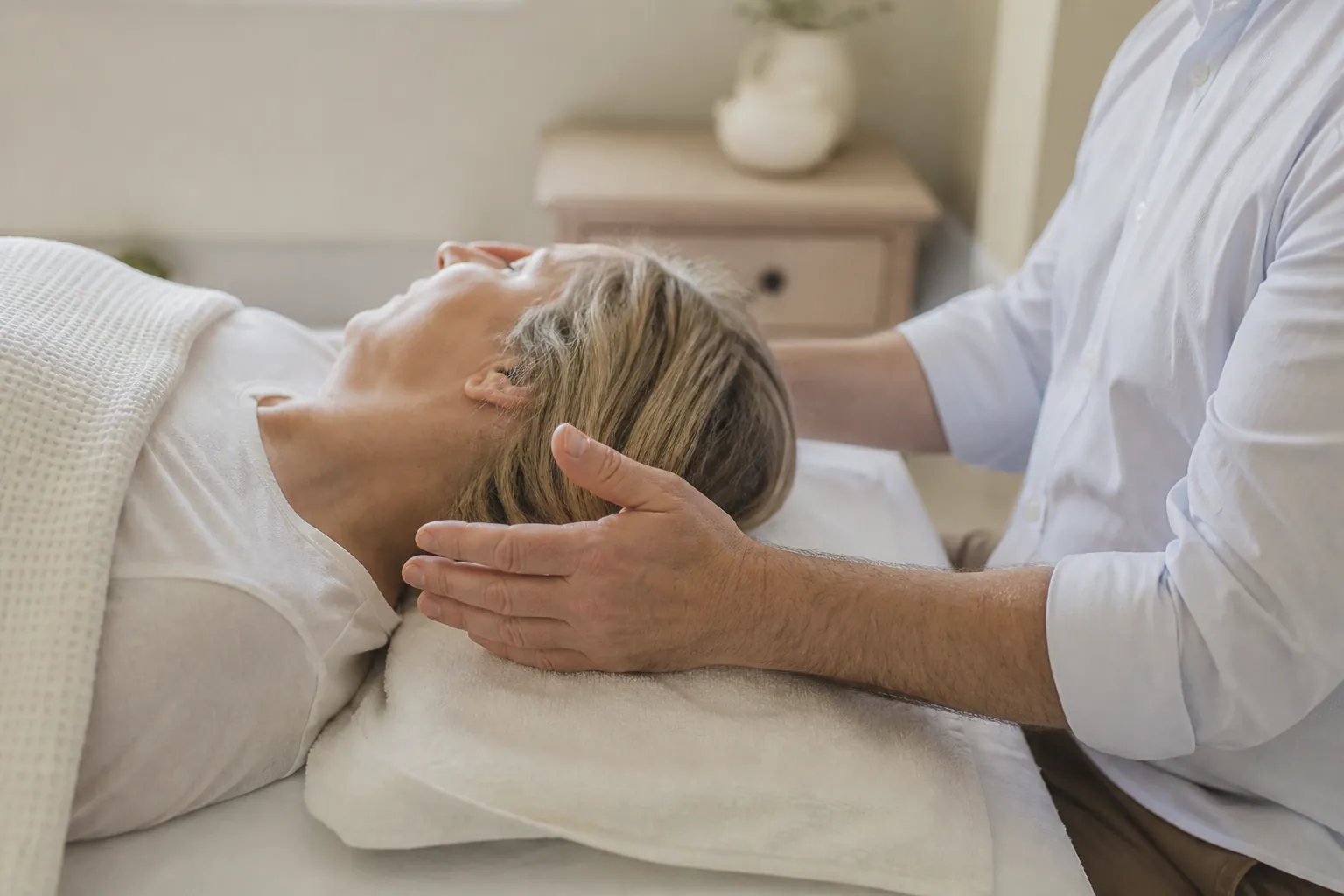
Cranial osteopathy is a refined, light-touch form of osteopathic treatment. Despite the name, it is not only about the head. Practitioners are trained to feel subtle changes in tissue tension throughout the body and to work with those patterns.
People sometimes assume that if it is gentle, nothing is happening. The aim is still clinical: to help restricted areas move more easily and to reduce the sense of being “wound up” in the tissues after physical or emotional stress. How much it helps varies from person to person. I will not promise a particular result.
It can be an appropriate style of osteopathy for people who prefer a lighter approach, for some older adults, and for infants, where treatment must be extremely gentle. It is still osteopathy: you get a full case history and examination. Initial visits are 60 minutes; follow-ups 40 minutes.
The research base for cranial osteopathy is smaller and more mixed than for some other manual approaches. That is a fair thing to say in a clinic article. Families and adults still choose it because the treatment is comfortable and because they notice a change in how they, or their baby, settle. I will discuss expected benefits and limits with you before we start.
This article is general information for people considering care at Health at Hart in Hartley Wintney. It is not a diagnosis, a prescription, or a promise of outcome. If you have sudden, severe or unexplained symptoms — including chest pain, unexplained weight loss, night pain, bowel or bladder changes, or a new neurological problem — seek urgent medical advice (NHS 111 or 999). UK osteopaths are regulated by the General Osteopathic Council. Counsellors named here are BACP-registered where stated. Always check with your GP or insurer if you are unsure whether a treatment is appropriate for you.
Appointments